




TurfGrass Trends - Home Page
May 9, 2008
Search

A Practical Research Journal
March 2008
Featured Research
Do Modern Insecticides Defeat IPM Concepts?
By: Rick L. Brandenburg
Bermuda Control Advances
By: John Willis, Shawn Askew
Cover Story
Controlling Your Poa
By: Bert McCarty
February 2008
Featured Research
Buffalograss Moves From Rough Grass to Fairway Potential
By: Robert C. Shearman
Cover Story
Poa Annua Suppression With Velocity Plus PGRs Requires Review of Weed Population
By: Steve McDonald
Disease Control
Silicon Suppresses Leaf Spotting on Bermudagrass
Silicon (Si) is considered a plant-nutrient anomaly because it is presumably not essential for plant growth and development. Soluble silicon, however, has enhanced the growth and development of several plant species including rice, sugar cane, most other cereals and several dicotyledons such as cucumber and water melon. The author present results of a study to determine if Si could enhance host plant resistance to Biploaris cynodontis, the cause of leaf spotting and melting out of bermudagrass in Florida.
Recent Cover Stories
Season, Zone Dictate Weed Control in Seeded Tall Fescue and Bluegrass
Weed control during establishment of tall fescue and Kentucky bluegrass from seed is difficult for many reasons. First, many herbicides normally considered safe on fully established stands of both grasses can be detrimental to newly developing seedlings. Herbicides containing broadleaf herbicides, such as 2,4-D and dicamba, can injure developing seedlings so severely that if applied to seedlings under the wrong conditions, a delayed turfgrass development can occur.
Predicting Nematode Populations Can Pre-empt Disease
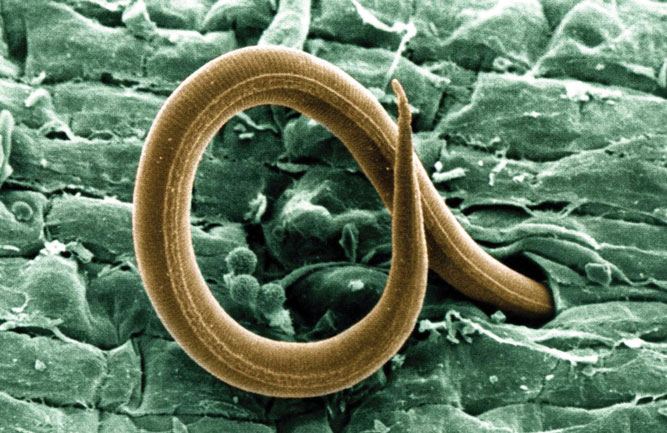
Nematodes are one of the few turf pathogens that can be managed using an integrated pest management strategy. Because plant-parasitic nematodes are ubiquitous in turfgrass soils, it would be impractical and impossible to eliminate them. Thus, turf managers in the Northeast must live with a certain number of plant-parasitic nematodes in any turfgrass stand. When the population of nematodes reaches a high level, it may cross a disease threshold, and symptoms might be observed. When this occurs, treatment is warranted to knock the nematode numbers below the disease threshold.
Four Tips to Interseed Bentgrass into Poa annua
Establishing creeping bentgrass into an existing stand of annual bluegrass (Poa annua) while the turf is in play has been an elusive goal of many golf course superintendents. Years ago I learned the hard way just how challenging it can be.
Featured Research
Recognizing the Nitrate Effect on Root Growth and Development
Recent evidence might cast the nitrate problem in a somewhat different light and may offer a few solutions.
Glysophate Resistance Prompts Integrated Management
Repeated use of the same herbicide is the main reason for weed resistance to herbicides worldwide. The widespread use of glyphosate-tolerant crops and repeated use of glyphosate herbicide is slowly resulting in glyphosate resistance and shifts in weed species.
Computer Simulation Tracks Water Flow in Greens, Part 2
In the December issue, we reviewed the need for a more accurate method for evaluating water flow in the three common types of greens: USGA (United States Golf Association), California and push-up. This month, we look at the results from the simulations.
Sponsors
Click here